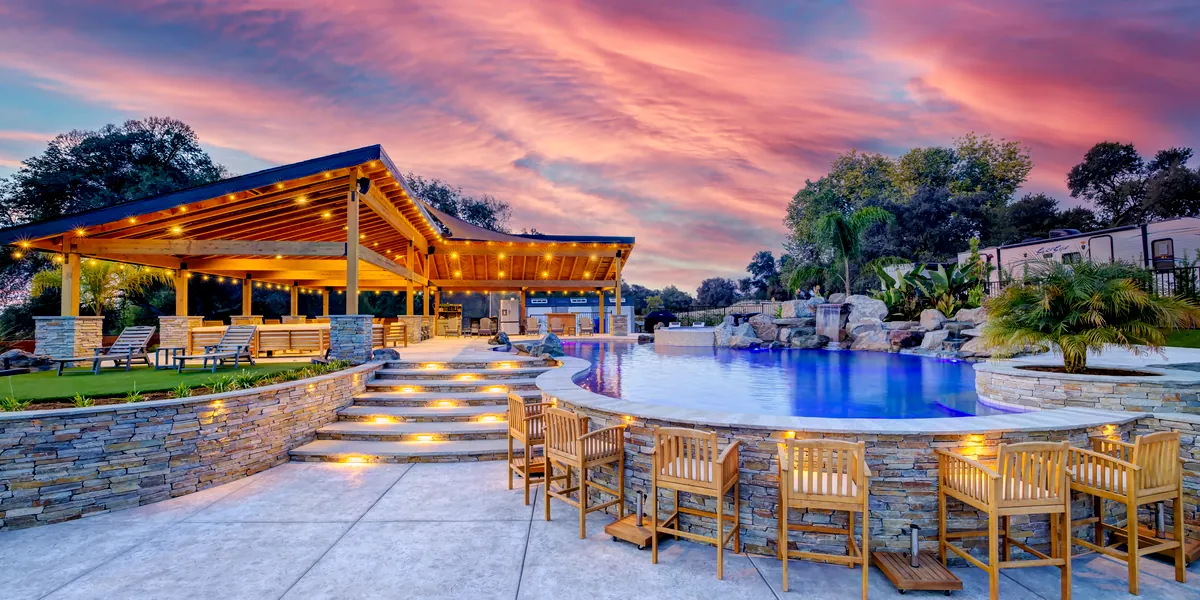
The short answer
Most new custom pools take about two and a half to four and a half months from the start of engineering to the first swim. Engineering and permits usually take three to six weeks, depending on your city. Construction then runs about eight to twelve weeks, depending on the size of the project and the weather.
Before any of that, there's design. How long design takes is mostly up to you: some families settle on a plan in one or two meetings, and others take longer to get it exactly right. We don't start the clock on permits until you've approved the design.
- Design
- your pace
- Engineering & permits
- 3–6 weeks
- Construction
- 8–12 weeks
- Total after design
- ~2.5–4.5 months
Design and permits
We design the pool in 3D on your actual lot, so you can see the shape, the spa, the features, and the deck from the house before anything is final. Once you approve it, we prepare the engineered plans and submit them for permits.
Permit time depends on the city. In Lincoln, approval often comes in about two weeks. In Rocklin, it's often four to six. If you live in an HOA, most require their own architectural review, so it helps to start that early. Our permits and safety post covers what the city checks.
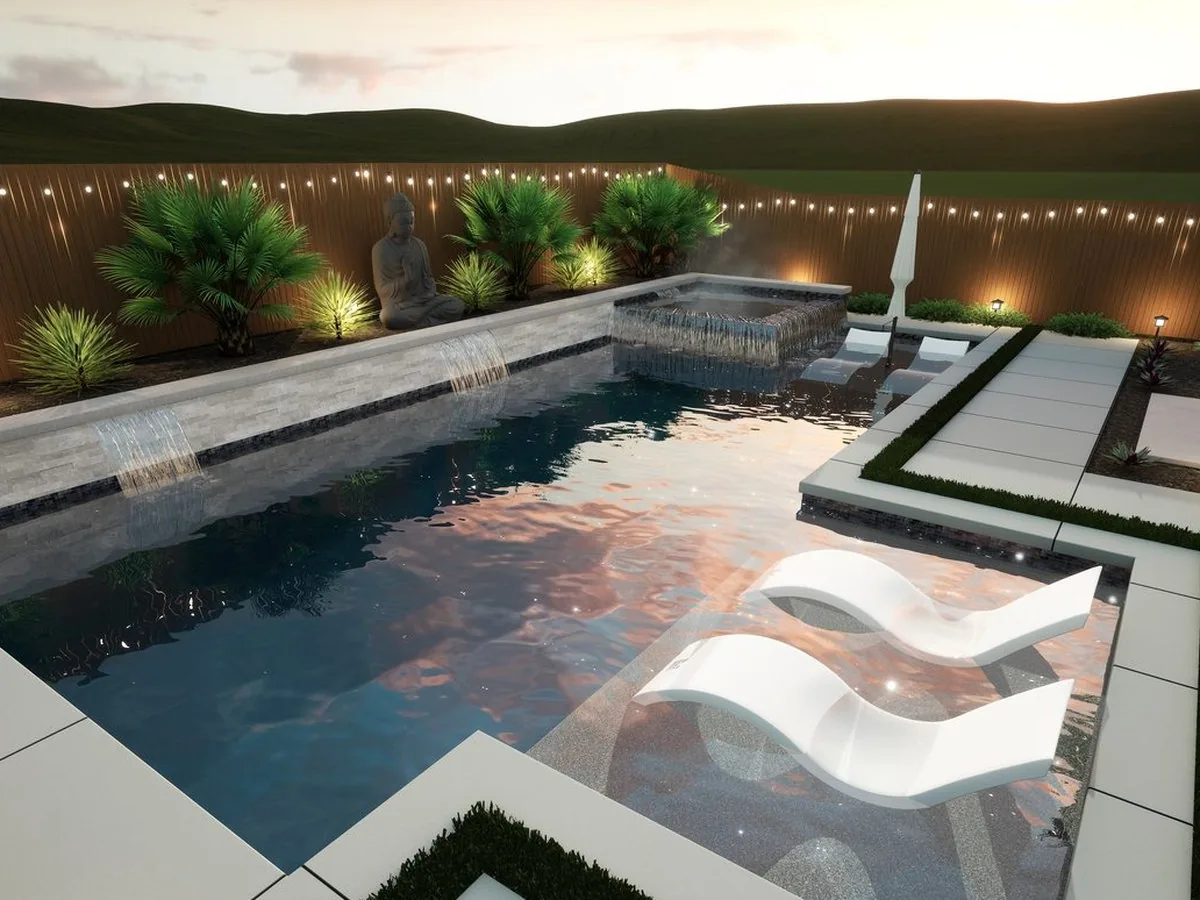
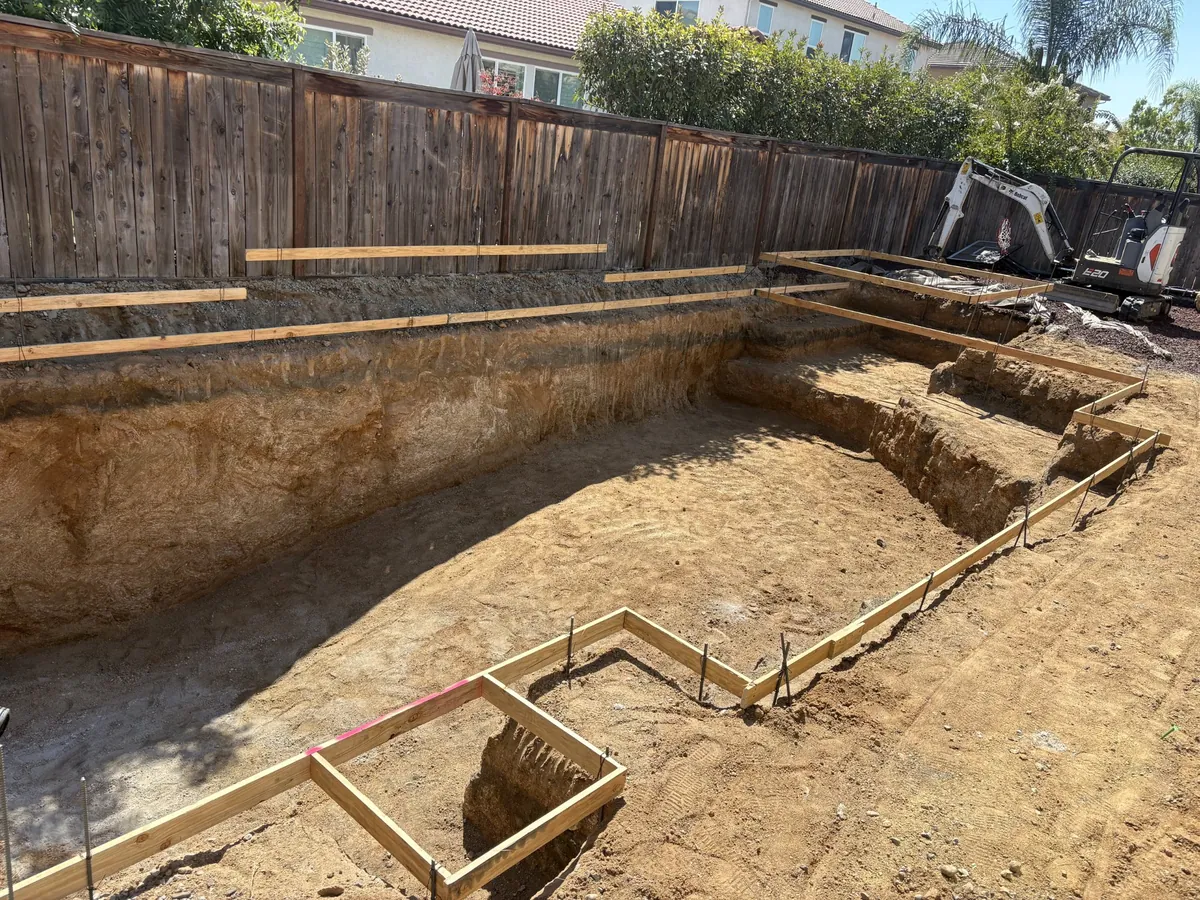
Excavation, steel and plumbing
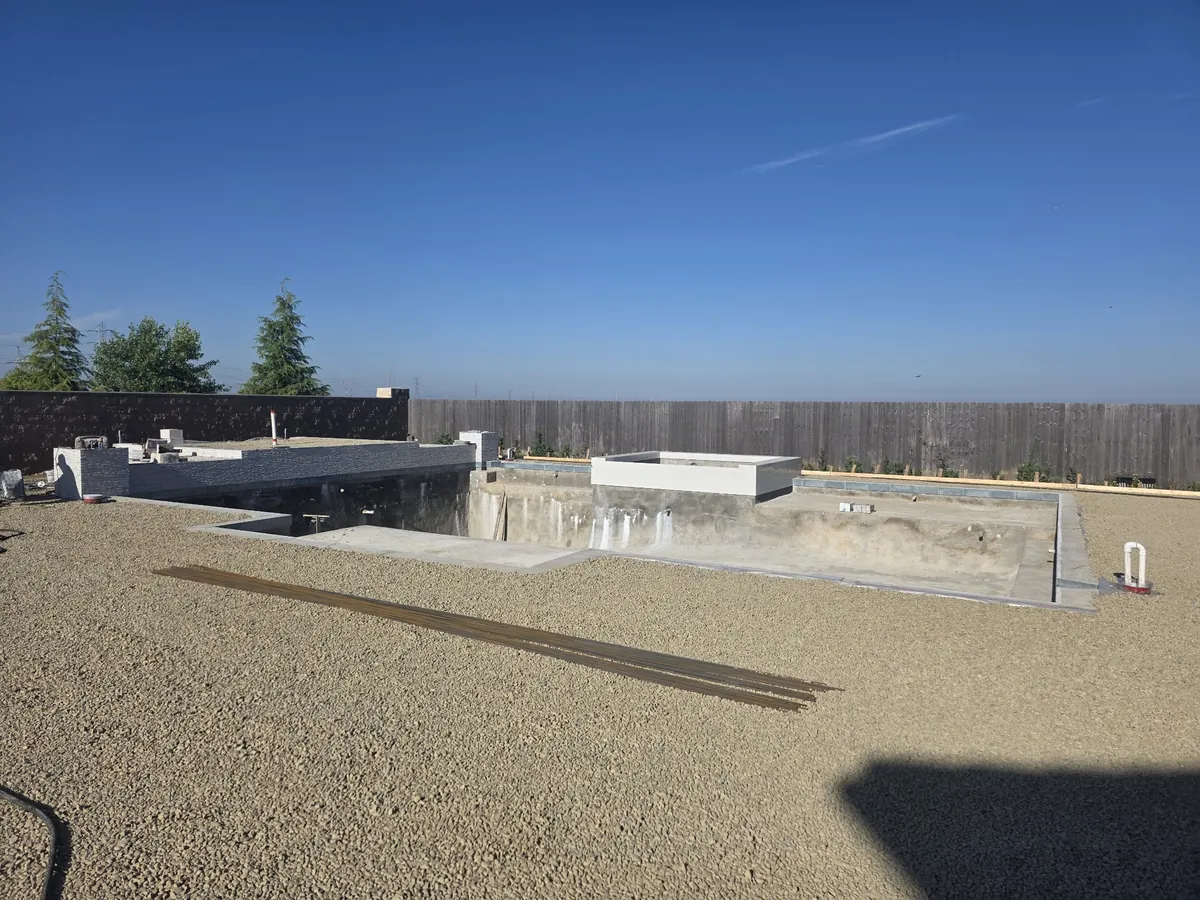
Construction starts with layout. We mark the pool on the ground so you can walk it, then excavate. Next, the steel crew ties the rebar cage that gives the shell its strength, and the plumbers run every line for the pool, spa, and water features inside that cage.
The plumbing is pressure-tested, and the city inspects the steel and plumbing before anything gets covered. This stretch usually takes the first few weeks of construction.
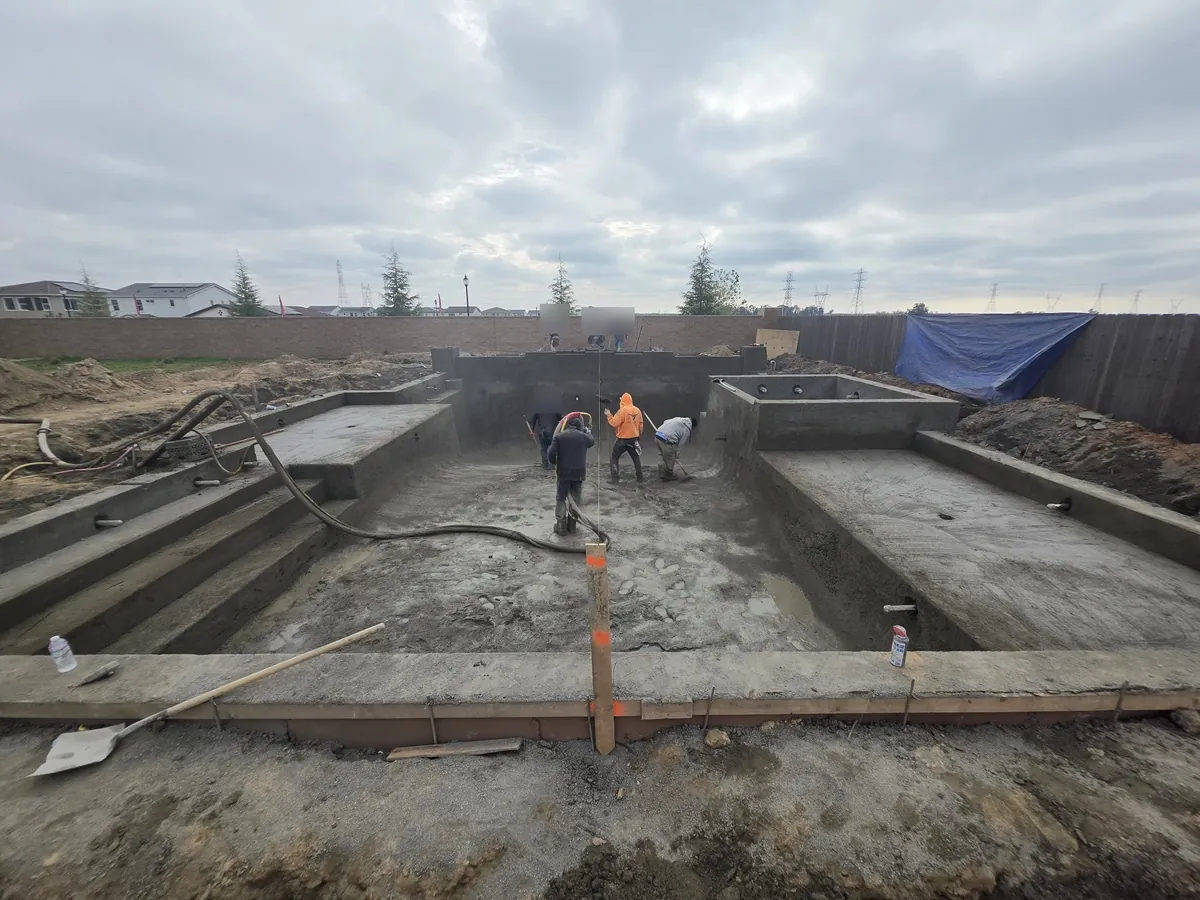
Gunite, tile and coping
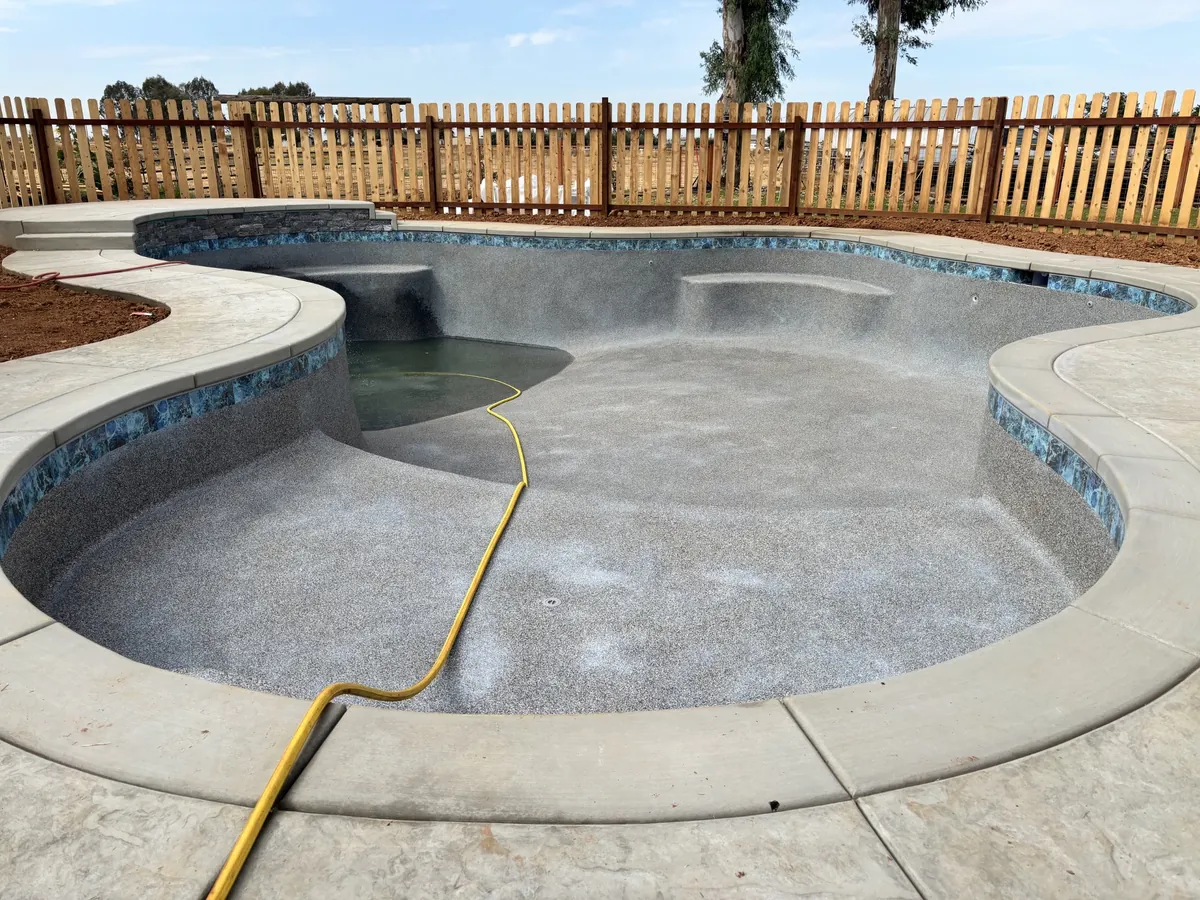
Once steel and plumbing pass inspection, the crew shoots the shell in gunite, a concrete mix sprayed over the steel. The shell then cures. After that, the waterline tile, coping, and any stone veneer on raised walls or spas go on.
Gunite is what lets us build any shape and size you design. Our gunite vs. fiberglass vs. vinyl post explains why we build that way.
Decking, equipment and plaster
Next comes the deck. We pour six-sack, highway-grade concrete with fiber mesh and rebar over a compacted base. The equipment pad is set and plumbed: pumps, filter, heating, and controls, all Pentair.
Plaster goes on last. The pool is filled right after, the equipment is started up, and the final inspection signs it off. Then it's your first swim.
How to keep your build on schedule
A few decisions on your side make the biggest difference to how smoothly a build runs.
- Settle the features during design. Spas, water features, fire features, lighting, and the deck size all go into the engineered plans. Adding them later can mean revised plans and another review.
- Start your HOA review early. If your neighborhood has an architectural committee, submit as soon as the design is approved so it runs alongside the city permit.
- Plan access to the yard. Excavation and gunite equipment need a clear path. We look at access during the design visit and tell you if a fence panel or gate has to come down for a few days.
- Hold landscaping until the deck is done. Planting and irrigation go in more easily once the heavy work is finished.
Your project manager will tell you what's coming next at each phase, so there are no surprises.
What can slow it down
Most delays come from a few sources, and we plan around them where we can.
- Weather. Heavy rain stops excavation, gunite, and concrete work until things dry out.
- Permits and HOA review. Some cities and HOAs simply take longer.
- Inspection scheduling. Each phase waits for the city to sign off before the next one starts.
- Changes mid-build. Adding a feature after the plans are approved can mean revised plans.
We give you a realistic schedule before we start, and your project manager keeps you posted at every phase.
California Trademark Pools builds new custom pools only, across Lincoln, Rocklin, Roseville, Granite Bay and the rest of our service area. Times in this post are typical ranges as of November 2026.