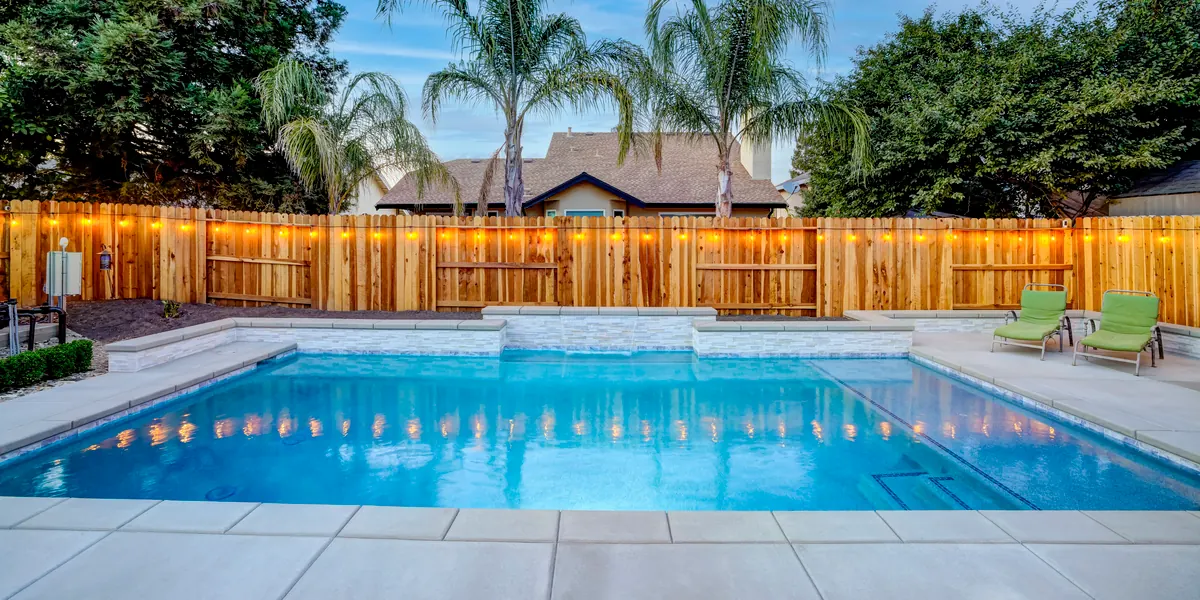
What a permit covers
Every new pool needs a building permit from your city or county. The permit package includes engineered plans for the shell, the plumbing and electrical, the equipment, and the safety features. The city reviews the plans, then inspects the work at set points during construction.
Permit time depends on where you live. In Lincoln, approval often comes in about two weeks; in Rocklin, often four to six. We prepare the plans, submit them, and handle the inspections.
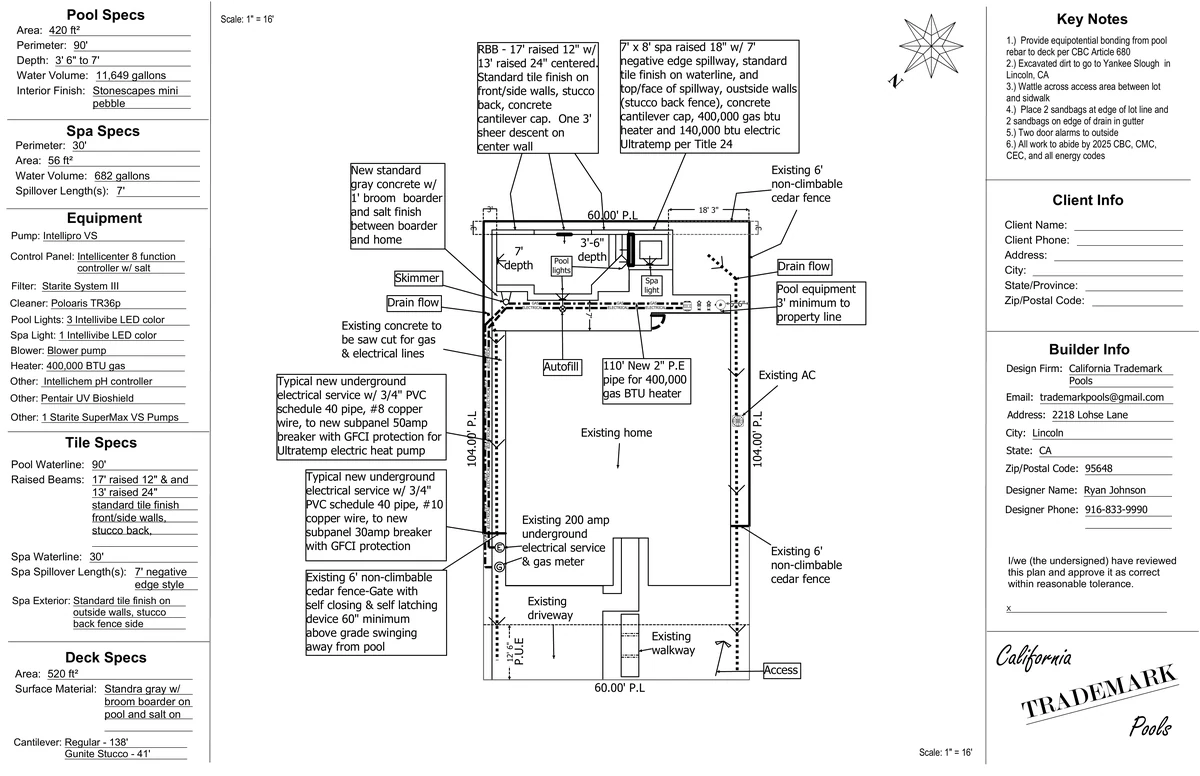
Two of seven drowning prevention features
California's Swimming Pool Safety Act requires a new pool or spa at a single-family home to have at least two of seven drowning prevention features before it gets its final permit. The options are:
- An enclosure that separates the pool from the house.
- Removable mesh fencing with a self-closing, self-latching gate that can be locked.
- A safety pool cover that meets the required standard.
- Exit alarms on house doors that open to the pool area.
- Self-closing, self-latching devices on those doors, with the release at least 54 inches above the floor.
- A certified alarm that sounds when someone enters the water.
- Other means at least as effective, independently verified.
Some pairings don't count together. Two is the state minimum, but the cities we build in usually require three: fencing, a pool alarm, and door alarms. Some cities and counties now require window alarms on top of door alarms. We confirm your city's list during design and build to it.
- State minimum
- 2 of 7
- Typical in our cities
- 3
- Usually
- fencing, pool alarm, door alarms
- Some cities & counties
- window alarms too
The energy code for heaters and pumps
California's 2025 Energy Code sets rules for new pool equipment. For a new single-family pool, the primary heater must be a heat pump, a solar heating system, or both. A gas heater can only be a supplemental source. An outdoor pool or spa with electric or gas heating must have a cover to hold in heat.
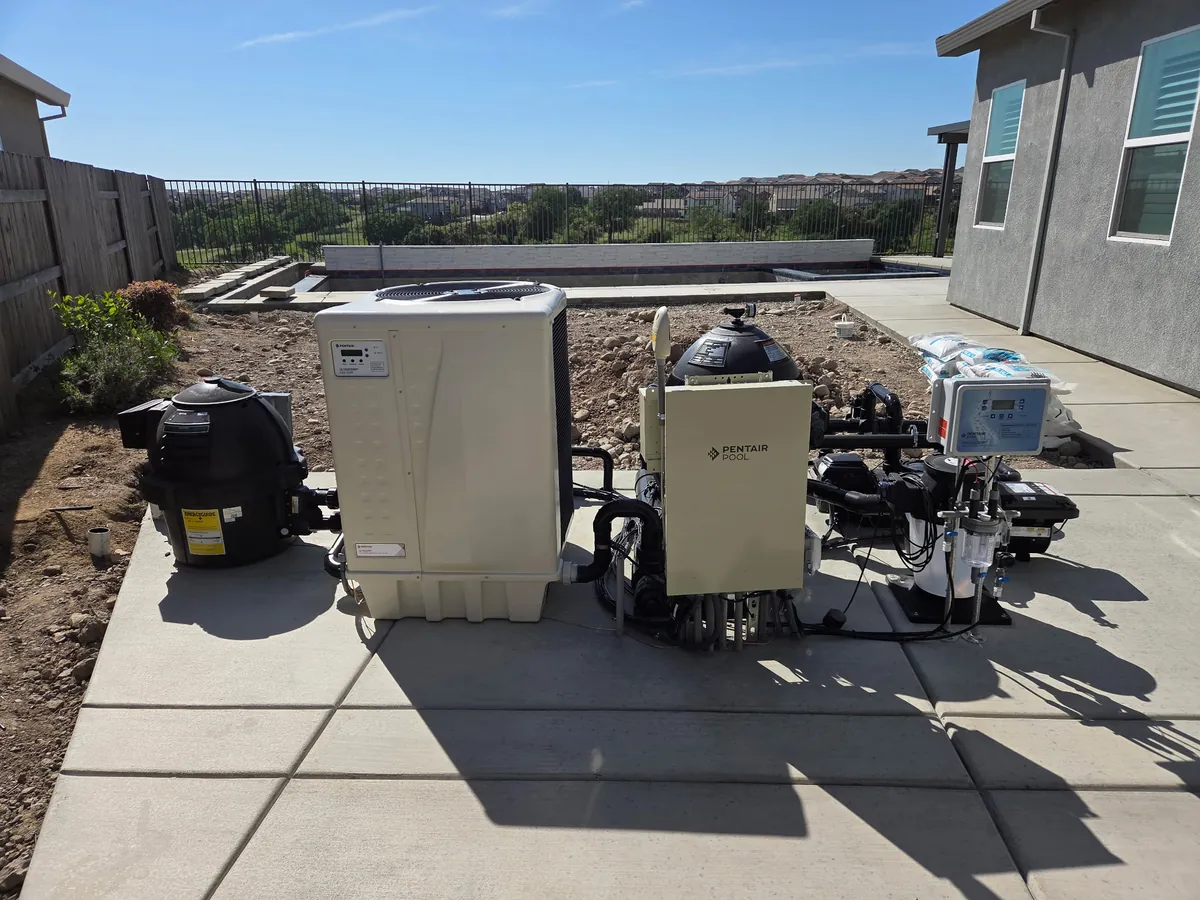
Pumps must be certified, programmable, and set to run efficiently, including during off-peak hours. The code also covers piping, inlets, and time switches. We spec the equipment to meet it, and the paperwork goes in with your build.
Inspections along the way
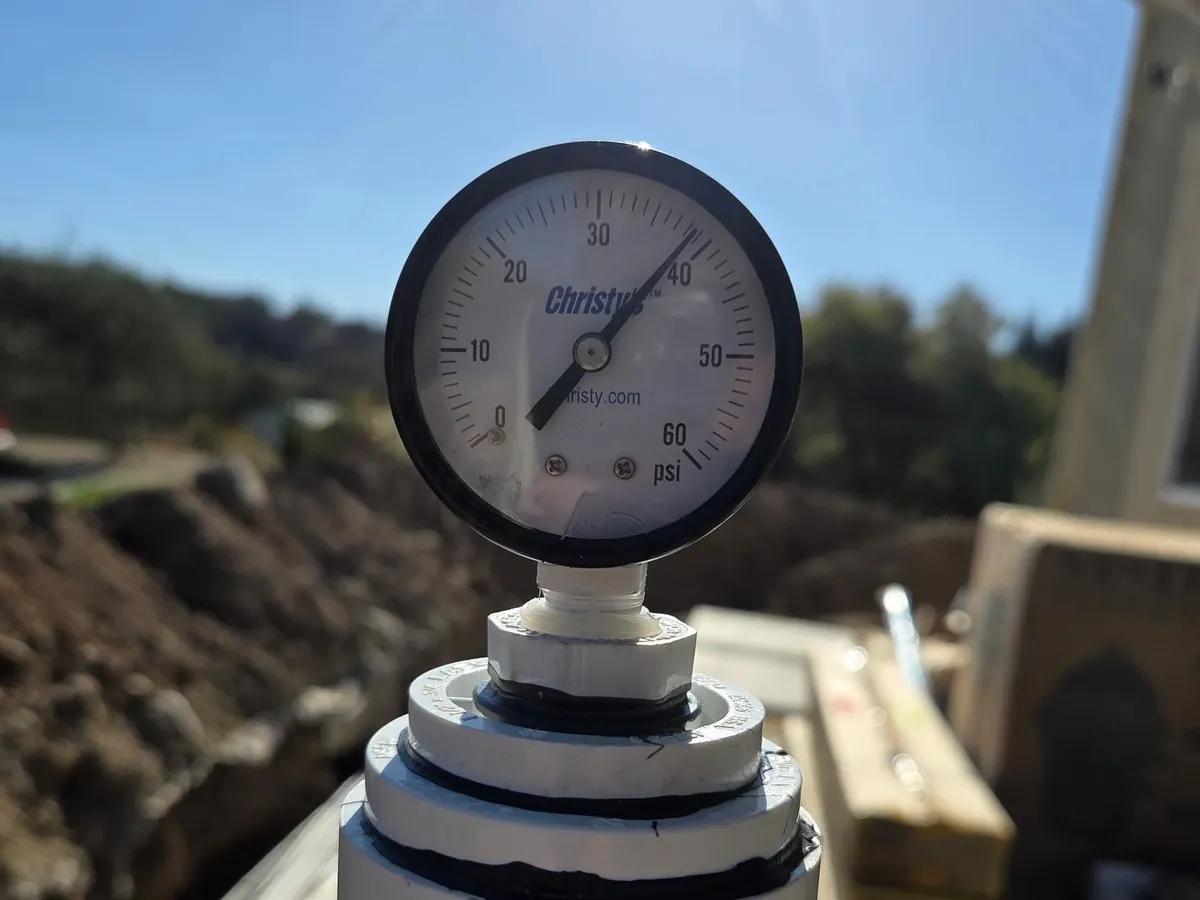
The city inspects at several points. Steel and plumbing are checked before the shell is shot, so nothing gets covered before it's approved. Electrical, gas lines for fire features, and the safety features are inspected too, and there's a final inspection before you're signed off.
Our process page shows each phase with photos from our builds.
Planning safety into the design
The safety features work best when they're part of the design, not added at the end. During the 3D design, we look at how the house opens onto the yard and which features your city requires.
- Fences and gates. An enclosure or mesh fence changes how the yard flows, so we place it with the deck and walkways in mind.
- Covers. An automatic cover needs to be planned into the pool's shape and the deck around it.
- Door and window alarms. These go on the doors, and in some cities the windows, that open onto the pool area, so it helps to know early which ones those are.
An automatic safety cover can do double duty: it can count as one of the safety features, and it's a cover for a heated pool under the energy code. We install automatic covers.
If you have an HOA
Many neighborhoods in Lincoln, Roseville, and Rocklin have an HOA with an architectural review committee. Many want to see plans before construction starts, and some have rules on equipment placement, fences, and access. Starting that review early keeps it from holding up the permit.
- Lincoln
- often ~2 weeks
- Rocklin
- often 4–6 weeks
- Engineering & permits
- 3–6 weeks overall
We handle the paperwork
From the engineered plans to the final inspection, we pull the permits and build to the code, and we explain what each rule means for your yard in plain English. Our planning guide has more on getting ready to build.
California Trademark Pools builds new custom pools only, across Lincoln, Rocklin, Roseville, Granite Bay and the rest of our service area. This post summarizes California Health and Safety Code section 115922 and the California Energy Commission's 2025 Energy Code guidance for single-family pools. Your city may have additional requirements.